News

Postdoctoral positions in cognitive development, computational cognitive development, and computational cognition

The Cognitive Development Lab under the direction of Dr. Vladimir Sloutsky and Model-based Cognitive Neuroscience Lab under the direction of Dr. Brandon Turner (both at The Ohio State University) are seeking applicants for several postdoctoral research associate positions for a variety of NIH and NSF supported projects focusing on various aspects of cognitive development, including the development of categorization, concept learning, and word learning, as well as the roles of attention, memory, and decision making in these processes.  A primary appointment could be in Sloutsky’s lab, in Turner’s lab, or split between the two labs.  The successful candidates are expected to work closely with Vladimir Sloutsky and Brandon Turner on research activities that can include designing and conducting cross-sectional and longitudinal studies, modeling cross-sectional and longitudinal data, and developing and implementing computational models linking the above-described processes.  Candidates are also expected to have broad interest in cognition as it changes across multiple timescales, as well as in building theoretical explanations for how these changes manifest.  The position is for two years with a possibility of reappointment, depending on availability of funding.

A successful candidate must have a Ph.D. in psychology, cognitive science, neuroscience, or related field, and have a strong research record. Although previous experience with developmental research is not necessary, special consideration will be given to candidates who have demonstrated interest in understanding the development of cognition. Interest and/or experience in computational or statistical modeling is also a plus.  Primary responsibilities will include active participation in research and collaboration with other members of the labs. 

Interested applicants should send a CV, research statement, up to 3 representative publications, and names of three references to Allison Granger (granger.102@osu.edu). For general inquiries please contact either Vladimir Sloutsky (Sloutsky.1@osu.edu) or Brandon Turner (turner.826@gmail.com).

In your application or inquiry, please specify which position(s) you are particularly interested in.  Applications will be received until the position is filled.  The earliest start date is the Fall of 2023.

To learn more about both labs, visit our websites: http://cogdev.osu.edu and https://turner-mbcn.com

Common Learning Dynamics Between- and Within-trial

New paper accepted at Psychological Review showing how attention can be framed as an optimization problem to explain information search both within- and across-trials. The manuscript builds on the earlier-developed Adaptive Attention Representation Model (AARM) by enabling attention orientation on a moment-by-moment basis. There are some other interesting ideas such as confirmatory search, coactivation of feature dimensions, and generating expectations about feature occurrence. Check it out!

New Method for Variational Bayes!

Matthew Galdo and Giwon Bahg developed a new algorithm for performing Bayesian inference by combining Differential Evolution (DE) as a mechanism to drive the optimization of Variational Bayesian methods of posterior estimation. Unlike your typical Automatic Differentiation algorithms relying on stochastic gradient descent, DE approximates the gradient through finite differences among particles in the system, giving the newly developed DEVI algorithm a leg up on non-standard optimization problems often found in psychology.

Check it out!

Galdo, M., Bahg, G., and Turner, B. M. (in press). Variational Bayesian methods for cognitive science. In press at Psychological Methods.

Paper published on collapsing bounds

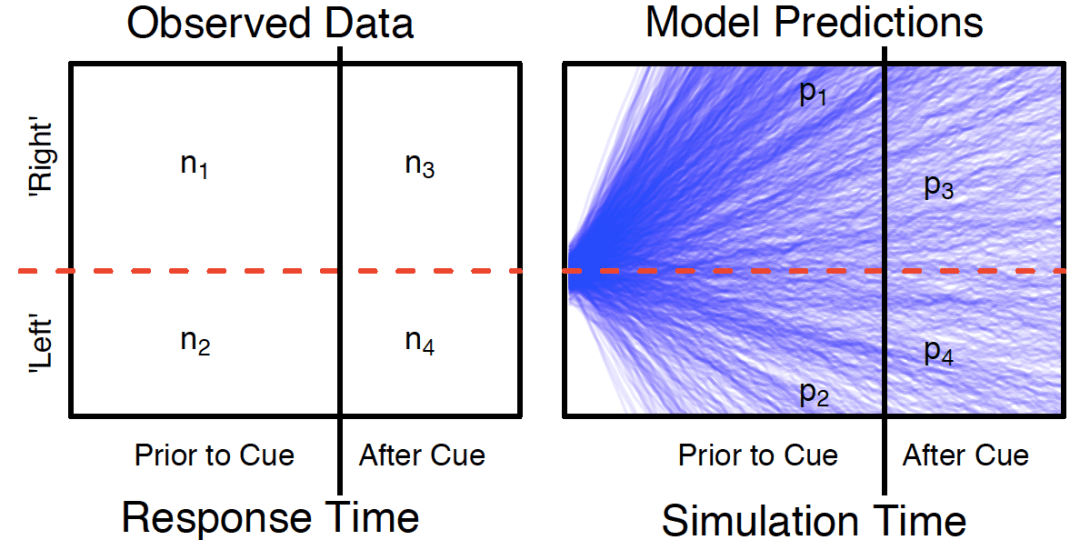
Ever wonder how time impacts the quality of your decisions? We just published a new paper that examines how information is integrated through time, and whether the influence of time can be stimulus-invariant in a perceptual decision making task. The major finding is that some decision processes depend intimately on the length of time that has elapsed, suggesting interesting temporal dynamics can sometimes underly decision making.

Current Version (preprint)

Supplementary Materials

Three New Ph.D. Students for the Fall!

As of this evening, three all-star students have committed to completing their Ph.D. research in the MbCN lab at The Ohio State University! The first is Woojong Yi, a masters student from Seoul National University. The second and third are Matthew Galdo and Fiona Molloy, both from The Ohio State University. All three are exceptionally talented with interests in computational modeling and neuroscience. Congrats!

woojongpictureidkfiona

New tutorial paper on joint modeling

In an effort to make joint models more accessible, we recently published a paper that uses JAGS as a way to implement joint models of neural and behavioral measures. In the paper, we discuss some illustrative models with different linking hypotheses, and then use these models in a realistic application linking single-trial neural activations in fMRI data to predictions about choice response time.

Check it out!

Tutorial paper

Paper published on the importance of including response time

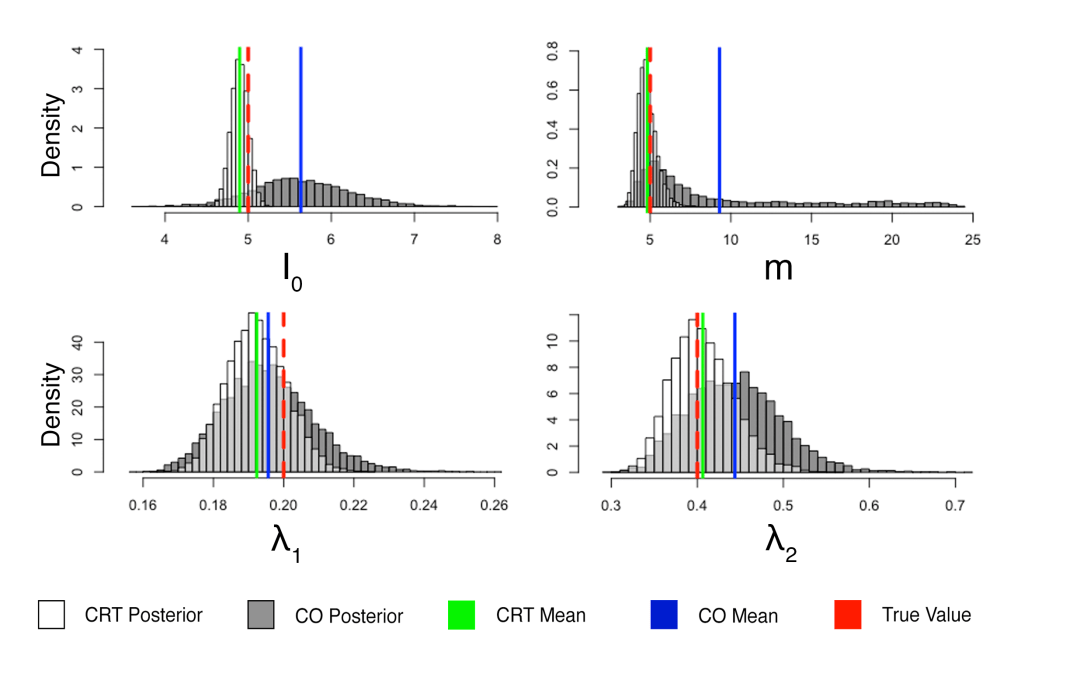
Our paper on the importance of including response time in constraining models of context effects was just accepted at Decision! Using the Multiattribute Linear Ballistic Accumulator model (MLBA; Trueblood et al., 2014) as a case study, we demonstrated the advantages of including response time, rather than just choice data, when fitting the model to data. Based on parameter recovery using both a likelihood-based (DE-MCMC) and likelihood-free (PDA) method, and fitting both simulated and real perceptual data, we concluded that response time provides an important constraint to models of context effects.

  • *Molloy, M. F., *Galdo, M., Bahg, G., Liu, Q., and Turner, B. M. (in press). What’s in a Response Time?: On the Importance of Response Time Measures in Constraining Models of Context Effects. In press at Decision. *Equal contribution.

Paper published on self-control

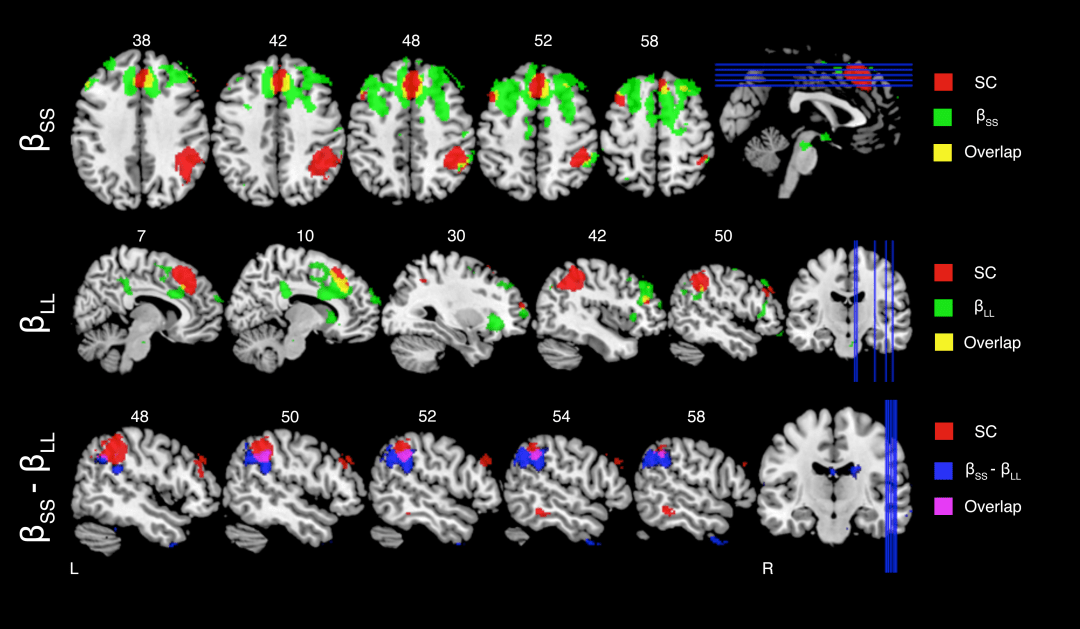
Our paper developing a model of trial-to-trial self-control measures was just accepted at Cerebral Cortex! After testing several model variants, we concluded that a model with an active suppression of a tempting, but inferior choice option provided the best fit to choice response time data across subjects (hierarchically). Perhaps more interesting is that the single-trial parameters of this inhibitory process correlated strongly with brain regions commonly associated with cognitive control.

James Palestro completes his masters!

On Wednesday, December 6th, James Palestro became the first student in the MbCN lab to complete his masters thesis. James’ work focuses on a recent debate between fixed and collapsing boundary models, which argue either against or for a temporal component of decision making. He reports an experiment of speeded two-alternative forced choice decisions using a mixture of free response and interrogation paradigms to differentiate the qualitative and quantitative predictions of the two model classes. In the end, his results suggest that some task demands induce a collapsing bound strategy.

Paper Published on Context Effects

When choosing among menu items at a restaurant, ever wonder how you represent and choose among items? We recently published a paper investigating the mechanisms at work during the deliberation process among multi-attribute, multi-alternative choices. To do this, we used Bayesian statistics to fit the extent theories of how this process unfolds, as well as an analysis meant to investigate the plausibility of various model mechanisms by testing each possible configuration. Check it out!